How to Reduce LLM Token Costs at the Data Layer
Lorem ipsum dolor sit amet, consectetur adipiscing elit. Suspendisse varius enim in eros elementum tristique. Duis cursus, mi quis viverra ornare, eros dolor interdum nulla, ut commodo diam libero vitae erat. Aenean faucibus nibh et justo cursus id rutrum lorem imperdiet. Nunc ut sem vitae risus tristique posuere.
.webp)
Every enterprise running AI agents at scale eventually asks the same question:
Why does the bill keep climbing when token prices keep falling?
The first instinct is usually prompt engineering: shorter instructions, fewer examples, a leaner system prompt. Those tricks help, but they run out of runway fast, because the biggest cost driver in a modern AI stack rarely is in the prompt itself.
The root causes are in the data layer underneath the AI stack, in how much context an agent has to search for, rebuild, and re-verify before it can answer anything at all. This article is about understanding where your data layer stands in driving up your token costs.
That is the real story behind token optimization for LLM systems in 2026. Trimming a prompt saves a rounding error, while fixing how an agent finds, trusts, and reuses enterprise context changes the shape of the entire token cost curve.
This piece covers what token optimization means, why token costs keep rising even as unit prices drop, where the tokens really go inside an agent loop, and why a governed data layer is the structural fix rather than another prompt trick. DataOS approaches this problem from the data foundation, and the sections below walk through why that foundation is a game changer for token cost optimization.
What is Token Optimization for LLMs
Every LLM call gets billed by the token, roughly four characters of English text, or about three-quarters of a word. A wordy request like asking for "a comprehensive overview of scheduled appointments" can cost more than double a plain "what's on my calendar," and providers price the two directions of that exchange differently on top of it.
Output tokens typically run four to five times the price of input tokens across major model providers, which turns a verbose answer into a measurable line item on the monthly bill.
That pricing structure explains why most teams start optimizing at the prompt: trim the instructions, cap the output length, swap a wordy question for a terse one.
McKinsey's analysis of enterprise AI spend management puts prompt caching alone among roughly forty levers that shape total cost, noting that reusing a static prompt prefix can cut repeated input-token costs by up to 90% for retrieval-heavy and agent workloads.
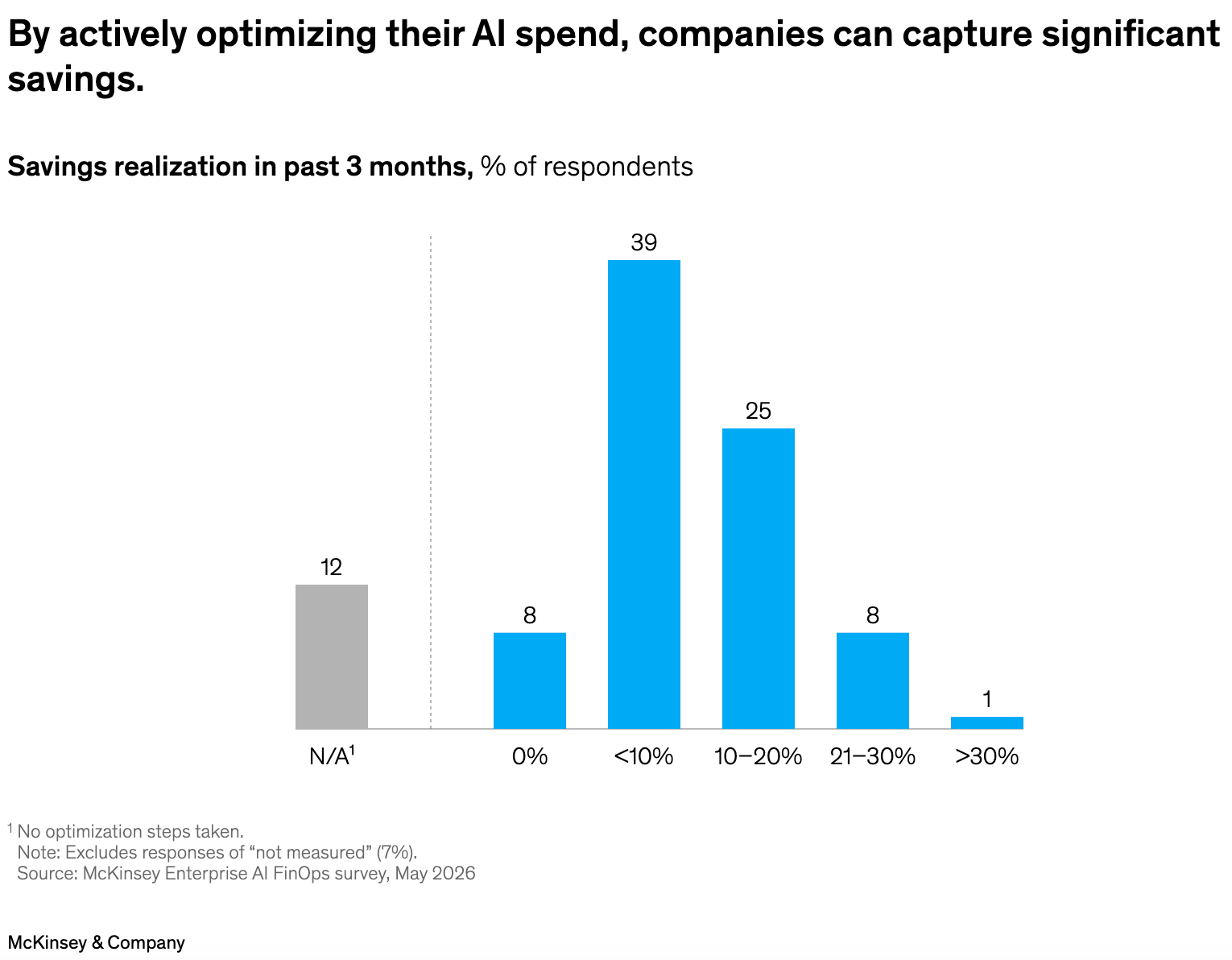
Model choice, routing decisions, and orchestration patterns carry at least as much weight in the total bill, and about a third of organizations surveyed had already achieved cost reductions of 20 to 30% through active token optimization work of this kind.
Considerable token optimization for LLM deployments treats the visible prompt as the smaller part of the payload. The larger, mostly invisible part is what gets attached to that prompt automatically: retrieved documents, schema definitions, tool descriptions, prior conversation turns, and the reasoning an agent generates while it works out what a metric means before it can even attempt an answer.
A data product that already carries its definitions, lineage, and quality contracts removes an entire category of tokens an agent would otherwise spend rediscovering that same context on every call.
Framed this way, token optimization becomes a question of architecture. The relevant test for any workflow is how much of what an agent needs to know already exists in a governed, reusable form before the call happens, versus how much of it the agent has to reconstruct or guess at inside the prompt itself.
DataOS's data products are built around exactly that test, bundling semantics, lineage, and policy into a unit an agent can consume directly instead of piecing together at runtime.
Why AI Costs Keep Rising Even as Token Prices Fall
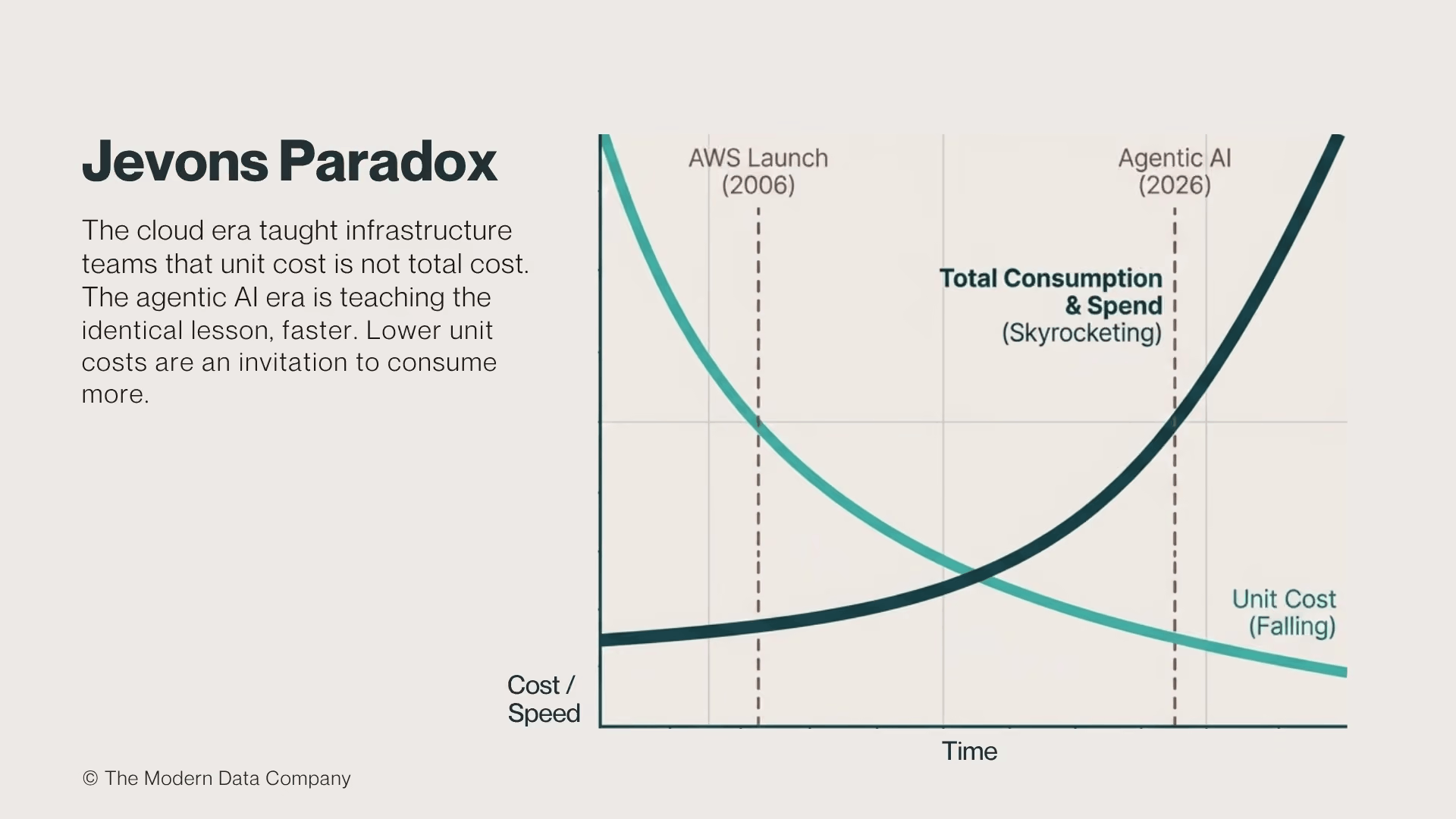
The economics here carry a pattern, and it predates AI by more than a century. In 1865, economist William Stanley Jevons observed that more efficient coal engines did not reduce Britain's coal consumption. They increased it, because cheaper energy unlocked uses that had never made economic sense before.
Brij Mohan Singh, Head of AI at The Modern Data Company, traces the identical curve in AI spend and token optimization, where inference costs have fallen roughly a thousandfold since 2022 while demand has climbed closer to ten thousandfold over the same stretch.
Token costs for comparable model capability have dropped around 98% since early GPT-3, while average enterprise AI budgets grew from an estimated $1.2 million a year in 2024 to $7 million in 2026.
Microsoft CEO Satya Nadella called out this pattern when a low-cost model release rattled the market. "Jevons paradox strikes again." Apollo's chief economist Torsten Slok has made a related point publicly: cheaper token costs invite companies to run more agents and automate more workflows, which pushes total spend higher even as the price per token keeps falling.
Agentic AI is what turns that general pattern into a concrete budget line item. A single-turn chatbot question might cost a few cents. The same task rebuilt as an agent, one that plans, calls tools, checks its own work, and retries on failure, can cost several dollars for a comparable outcome.
Goldman Sachs Research projects that global token consumption could multiply roughly 24 times by 2030 as this shift compounds across enterprise and consumer use.
None of these considerations makes falling token prices a problem to solve, but confirms that the unit price of a token was never the real lever on your budget.
The lever is how many tokens your architecture burns to complete one unit of work, and that figure is set almost entirely by how context gets found, assembled, and trusted, far more than by which model you happen to call. The Modern Data Company's own analysis of this dynamic walks through the mechanism in more depth, including how the shift from conversational to agentic usage patterns reshapes a typical enterprise bill.
Where Do Tokens Get Spent: Search, Reconstruction, Validation, and Retries
Trace a real agent task and the token spend rarely looks like a clean prompt-in, answer-out exchange. It looks like a loop: discover what data exists, retrieve schemas, enumerate columns, run a query, check the result against expectations, and sometimes repeat the whole sequence because the first attempt used a stale definition or joined the wrong table.
Gartner's own analysis of agentic workloads finds that a single agentic session can generate between five and thirty times the token consumption of an equivalent standard chatbot query, driven largely by this repeated discovery and verification cycle rather than by the final answer itself.
Benchmarking of this exact pattern found an unscoped agent working against an ungoverned catalog spent 183,541 tokens and roughly $0.60 to complete a single query end to end, largely on catalog inspection and schema discovery it repeated on every run, even against sources that had stayed stable for months. Scoping the same workflow to a governed catalog with pre-joined views and cached results cut that cost by more than 93%, without changing the underlying question or the model behind it.
McKinsey's research into agentic system economics reaches a related conclusion from a different angle. Its analysis found that roughly 60% of an agentic task's total cost sits in refinement: checking, repairing, and re-verifying an answer rather than generating the first draft of it.
A companion academic study, Tokenomics: Quantifying Where Tokens Are Used in Agentic Software Engineering, measured this pattern directly across production coding workflows and found that iterative review accounted for 59.4% of total tokens, with input tokens, largely re-sent context an agent had already processed once, making up 53.9% of the total across the tasks studied.
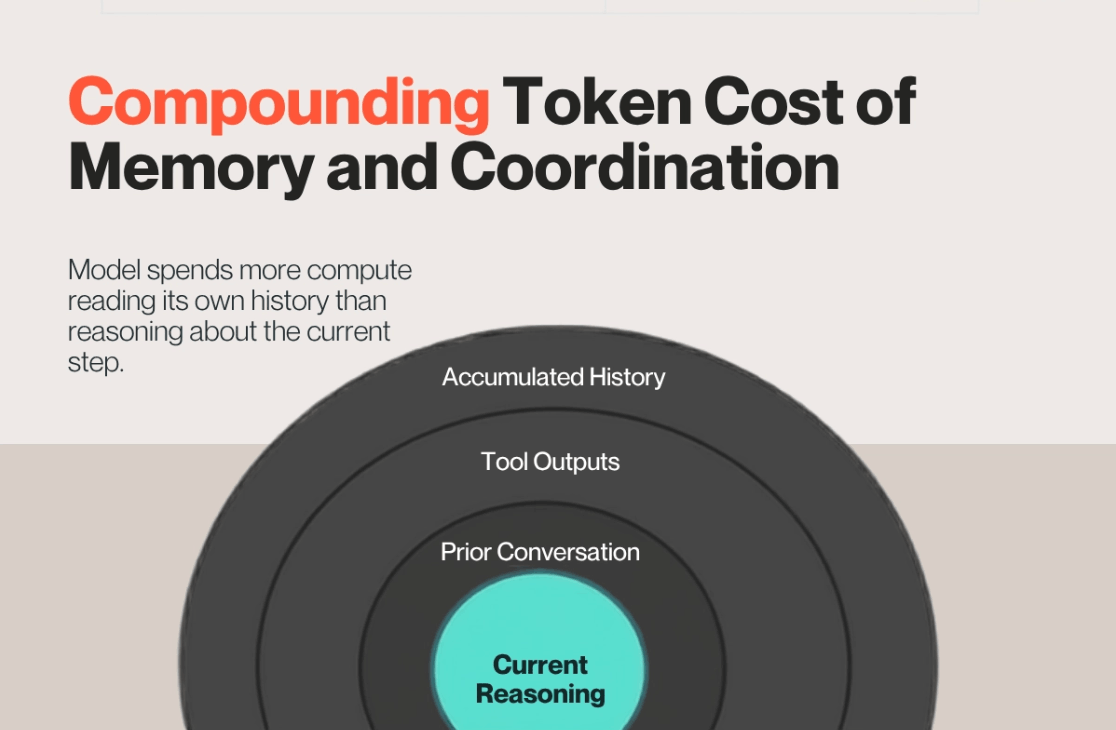
Put those findings together, and the shape of the problem is clear. The costly part of an agent's work is rarely the final answer. It is working out what the question means against enterprise data the agent has to rediscover on every call, then checking that answer against a definition it cannot fully confirm on its own.
McKinsey's write-up on this cost breakdown reframes the equation for anyone still budgeting off the per-token price sheet: the number that matters is what a completed task costs against what it delivers, refinement cycles included, and that number climbs fastest wherever context gets rebuilt or re-checked instead of trusted.
This also explains why discovery-heavy workflows are the norm rather than the exception. Every agent running against an ungoverned catalog pays the same rediscovery cost on repeat, because nothing in the architecture remembers that a version of this same question already got answered last week.
The Data Layer Fix: Reusable Context, Governed Data Products, and the Semantic Layer
If most token spend traces back to search, reconstruction, and validation, the fix has to attack those three directly, which makes this an architecture decision before it is a prompting one.
Speaking at a 2026 Data & Analytics Summit, VP Analyst Rita Sallam told attendees that agentic outcomes depend on semantic representations of data, and that without a clear understanding of the relationships and rules inside an organization's data, agents are more likely to hallucinate and produce unreliable results. Sallam's framing was direct: semantic coherence is becoming a cost-control and trust strategy for the organizations that adopt it early.
A governed semantic layer changes what an agent has to do at runtime.
Without one, an agent infers table relationships, guesses at joins, and invents metric definitions on the fly, an open-ended reasoning exercise that burns tokens and produces inconsistent answers across calls.
With a governed semantic layer, the agent looks the definition up, turning an expensive reasoning task into a cheap retrieval one. Gartner projects that organizations prioritizing semantics in their AI-ready data could see agentic accuracy improve by up to 80% while cutting associated costs by as much as 60% by 2027.
Governed data products extend the same logic to the data itself. A data product that bundles its schema, lineage, quality contracts, and access policy into one unit means an agent asking what a metric means gets a permissioned, current answer with provenance attached, rather than whatever happens to sit in a retrieval index that day.
Lineage closes the loop further: an agent that can trace where a number originated skips a round of re-verification, because the trust work already happened upstream, once, instead of inside every call that touches it.
The thread connecting a semantic layer, a governed data product, and clean lineage is reuse. All three let an agent inherit context that a data team built once, instead of paying an inference bill to rebuild it every time an agent runs. Every governance surface an agent needs (like identity, permissions, semantics, and audit trails) tends to already exist in some form inside a mature data platform, which means the fix is rarely a new tool bolted onto the agent layer on top of everything else.
How to Optimize LLM Token Costs with DataOS
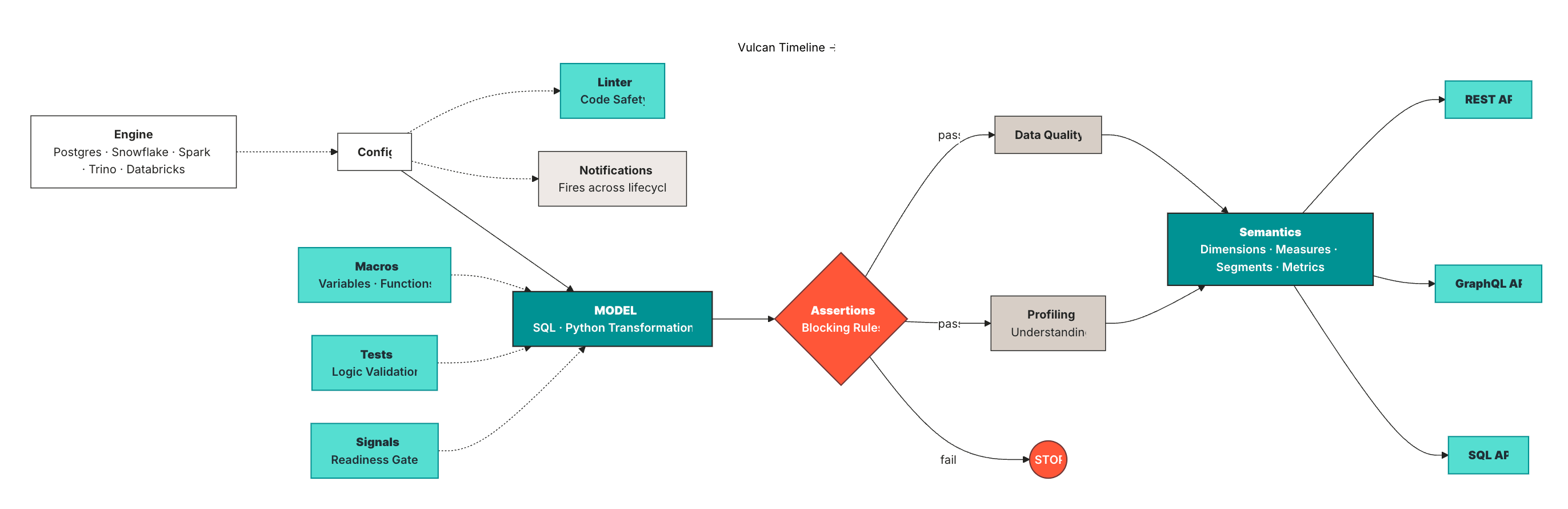
DataOS's approach differs from adding a caching layer on top of an existing stack. DataOS builds context once at the data layer, as a governed data product with its semantic model, lineage, and access policy attached, and every agent that touches that product inherits the same context instead of rebuilding it per call.
DataOS's semantic model and metrics layer turn a business measure into a single queryable definition that dashboards, reports, and agents all share, so the definition gets built and paid for once rather than re-derived on every call an agent makes.
That structure attacks the same three token cost drivers this article has traced back.
- Search shrinks because an agent queries a known, governed model instead of exploring an unscoped catalog from zero.
- Reconstruction shrinks because context persists as a versioned, reusable artifact rather than something rebuilt inside a prompt each session.
- Validation shrinks because lineage and quality contracts travel with the data product itself, so an agent inherits a trust signal instead of generating one through repeated self-checking on every run.
How to Audit Your Own Token Spend: A Data Layer Diagnostic
Before assuming the fix is a smaller model or a shorter prompt, measure where the tokens are being spent. Trace one representative agent task end to end and tag tokens by phase:
- discovery and schema lookup,
- retrieval,
- reasoning toward an answer,
- and validation or retry.
Teams running this exercise for the first time are often surprised at how small the "reasoning toward an answer" slice turns out to be against everything surrounding it.
From there, check for the specific patterns this piece has covered.
- Does the same agent rediscover the same schema on every call against a source that has not changed in weeks?
- Does a metric get redefined inside a prompt because no governed semantic layer exists to look it up instead?
- Does an answer get re-verified from scratch each time because lineage is not available to confirm where the number came from?
Each pattern that turns up points to a token line item that architecture can remove, rather than one a shorter prompt can meaningfully trim.
DataOS works through several of these exact patterns across enterprise contexts, from demand forecasting to dealer network analytics, showing where a semantic layer and reusable data products replaced repeated discovery work with a standing, governed answer.
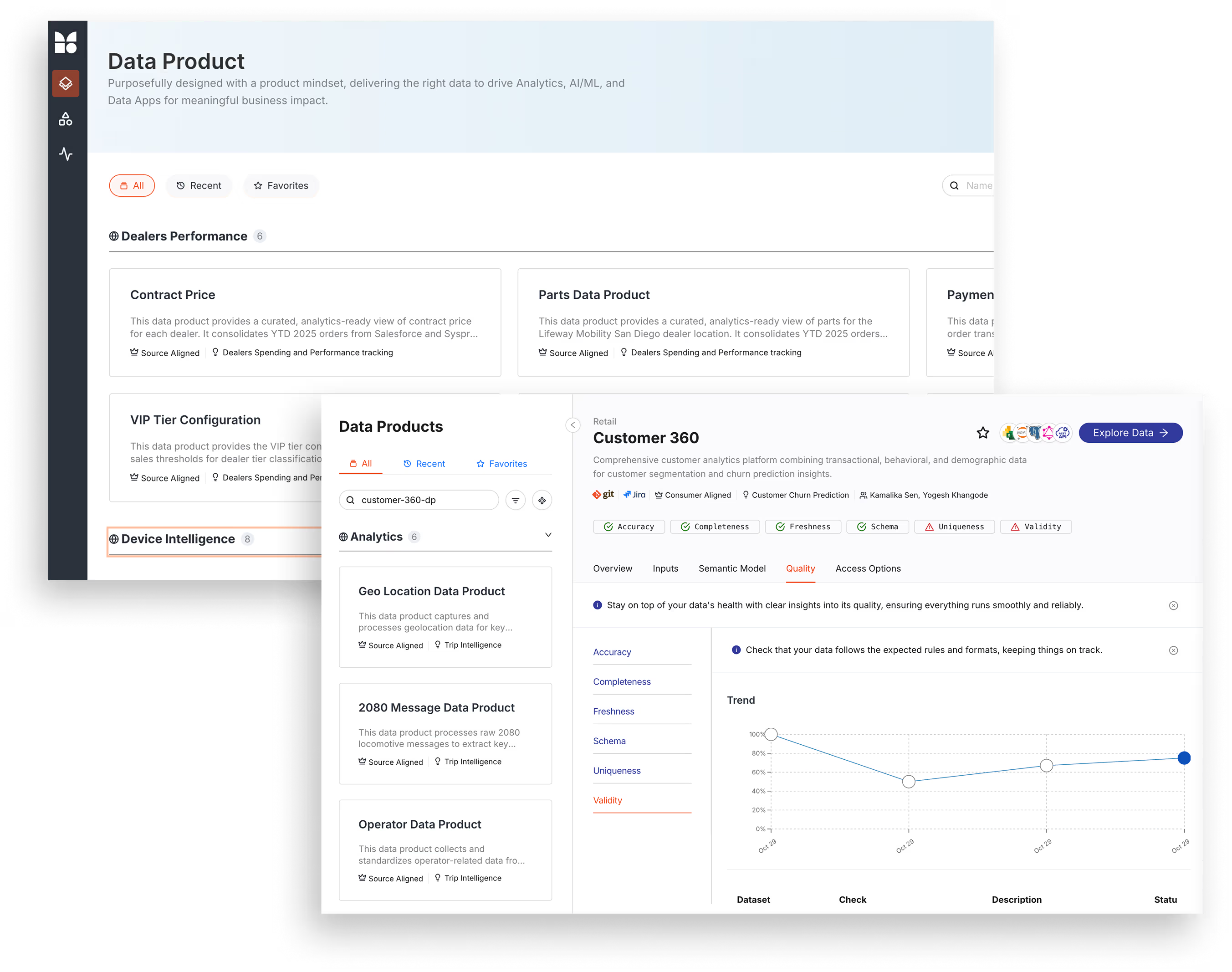
Turning that audit into an actual number is the point of a proper diagnostic. Rather than estimating savings from an industry average, an AI Cost Diagnostic maps token costs and spend against these categories for your specific workloads and shows what a governed data layer changes for each one.
The Modern Data Company can walk through that diagnostic directly, and the full framework behind it, including the audit checklist referenced throughout this piece, is available as a downloadable whitepaper for teams that want to run a first pass internally.
Frequently Asked Questions
What is token optimization for LLMs?
Token optimization for LLMs is the practice of reducing how many tokens an AI application consumes per task without degrading output quality. It includes prompt design, but the larger and more durable savings come from architecture: how much context an agent has to search for, rebuild, or re-verify before it can respond.
Why do AI costs keep rising even as per-token prices fall?
This follows the pattern economists call Jevons paradox. Falling unit prices unlock new use cases faster than they save money on existing ones. As token prices dropped, agentic workflows replaced simpler chatbot interactions, and agentic tasks consume five to thirty times more tokens per task, so total spend keeps rising even as the price per token keeps falling.
How many tokens does an AI agent use compared to a chatbot?
A single-turn chatbot query might use a few thousand tokens. An agent completing an equivalent task through a multi-step loop of planning, tool calls, and verification can use tens or hundreds of thousands of tokens for the same underlying outcome, largely because it re-sends accumulated context at every step of the loop.
What is a semantic layer, and why does it lower token costs?
A semantic layer defines business metrics, entities, and relationships once, in a governed and reusable form. Instead of an agent inferring joins or inventing a metric definition inside every prompt, it looks the definition up, converting an expensive reasoning task into a cheap retrieval one.
How do I reduce LLM token costs without hurting response quality?
Audit where tokens go across the discovery, retrieval, reasoning, and validation phases of a representative task first. Fixes that target reused context, including governed data products, semantic layers, and lineage, tend to cut cost while leaving output quality intact, because they remove redundant work rather than shortening the answer itself.
How do I audit my own AI token spend?
Trace one agent task end to end, tag tokens by phase, and look for repeated discovery, redefinition, or re-verification against data that has not changed. Those patterns show exactly where a data layer fix, rather than a prompt rewrite, will save the most.