Biopharma Manufacturing Manufacturing Intelligence: Build consistent quality into every batch
This solution links process conditions with product quality in real time, so biopharma teams understand what drives outcomes, improve control, and deliver reliable results across every batch.
Proven impact with DataOS
Biopharma manufacturers connecting process and quality data see measurable gains in risk avoidance, speed, and control.


Why manufacturing quality data breaks down
Biopharma manufacturing generates enormous volumes of process and quality data, but most of it can't be connected fast enough to prevent the next batch failure.Most claims programs manage evidence across multiple systems and document repositories.
When process and quality data stay fragmented:


How DataOS solves it
DataOS connects production and quality data from MES, LIMS, historians, and other manufacturing systems into one continuously updated view, automating the data preparation that today happens by hand.
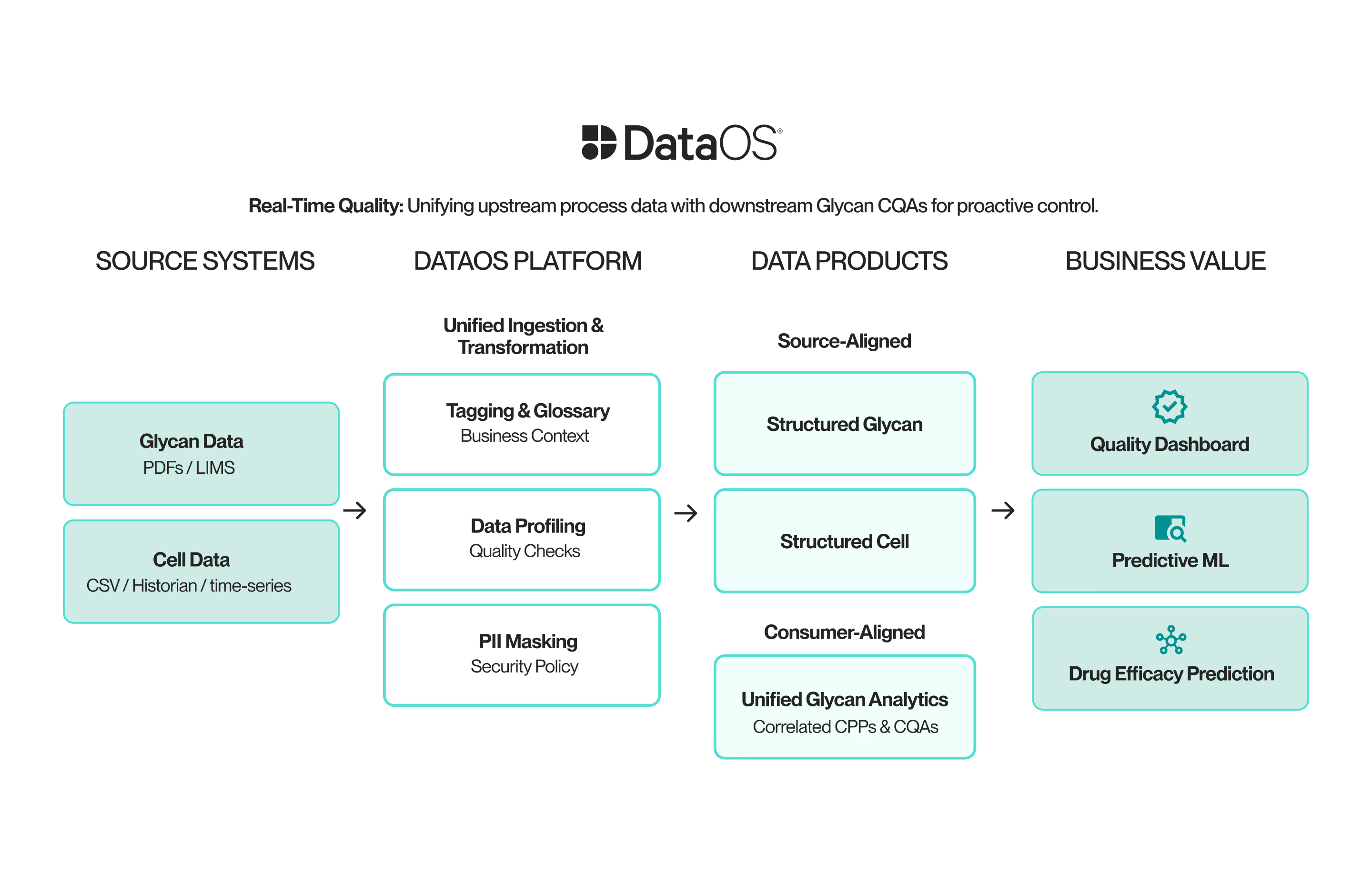
By linking process conditions directly to final product outcomes, teams can see what's actually driving quality, catch deviations as they happen, and trace every data point from source to output for compliance and validation.
Who this solution is for
Manufacturing Quality Intelligence is built for organizations scaling biologics and biopharma manufacturing across sites.
Biopharmaceutical manufacturers
Process development, quality control, and manufacturing science and technology teams working to reduce batch variability.
Contract Development and Manufacturing Organizations (CDMOs)
Managing process and quality data across multiple client programs and manufacturing sites.
Multi-site scale-up and tech transfer teams
Organizations replicating manufacturing processes across facilities and geographies.
Data and digital manufacturing leaders
Chief Data Officers, data platform architects, and VPs of Engineering or Digital Manufacturing building the underlying data foundation.
What quality intelligence looks like
Traditional Manufacturing Data
- Production and quality data live in separate systems (MES, LIMS, historians)
- Batch failures discovered weeks after the fact
- Root cause analysis relies on manual data stitching
- Regulatory submissions slowed by limited traceability
- Tech transfer repeats manual integration work at every site
Manufacturing Intelligence with DataOS
- Unified, real-time view of process and quality data
- Deviations detected as they happen, not after batch failure
- Root cause analysis powered by connected, traceable data
- Built-in lineage supports faster regulatory submissions
- Deploys in 8 to 12 weeks with pre-built connectors, repeatable across sites
Why real-time, not retrospective, matters
Because it deploys with pre-built connectors and pipelines, most implementations go live in 8 to 12 weeks, connecting to existing systems historians without moving data or replatforming.
Brings together production data and quality data from different systems into one unified view.
Continuously ingests data so teams can detect issues as they happen, not weeks later.
Connects manufacturing conditions to final product outcomes to show what is driving quality.
Eliminates manual data merging by cleaning, structuring, and standardizing data automatically.
Tracks every data point from source to output, making compliance and validation easier.
Powers dashboards and analysis that help teams monitor performance, identify risks, and take action.
Key points of difference


Frequently Asked
Questions
Traditional systems take months to implement and rely on manual modeling and integration. This solution provides a unified, real-time data layer with much faster deployment.
Yes. It connects to existing systems historians without requiring data movement or replatforming.
By linking process conditions to quality outcomes in real time, it enables early detection of deviations and corrective action before failures occur.
Yes. It provides full data lineage and traceability to support validation and regulatory submissions.
Typical implementation timelines are 8 to 12 weeks, significantly faster than traditional approaches.