Building Business Alignment for Data Teams: Start With Four Questions
Lorem ipsum dolor sit amet, consectetur adipiscing elit. Suspendisse varius enim in eros elementum tristique. Duis cursus, mi quis viverra ornare, eros dolor interdum nulla, ut commodo diam libero vitae erat. Aenean faucibus nibh et justo cursus id rutrum lorem imperdiet. Nunc ut sem vitae risus tristique posuere.

Every data team has sat in this meeting. A business leader looks at a clean, well-built analysis and says some version of: “Good data, but I trust my gut on this one.” It happens more than data leaders want to admit. That doesn't mean the leader is wrong, or the data team failed at their job.
Closing that gap usually gets framed as a business problem: leaders need to trust data more. Nearly half of employees still default to gut feeling over data when they make a decision. The habit gets stronger further up the org chart.
We shouldn't just blame business, though. Data teams need enough business acumen to earn trust by aligning work with business objectives.
What Is Business Acumen for Data Teams?
Business acumen for data teams means understanding how a company creates value for customers and turns that into revenue, well enough to know which data actually matters for a given decision.
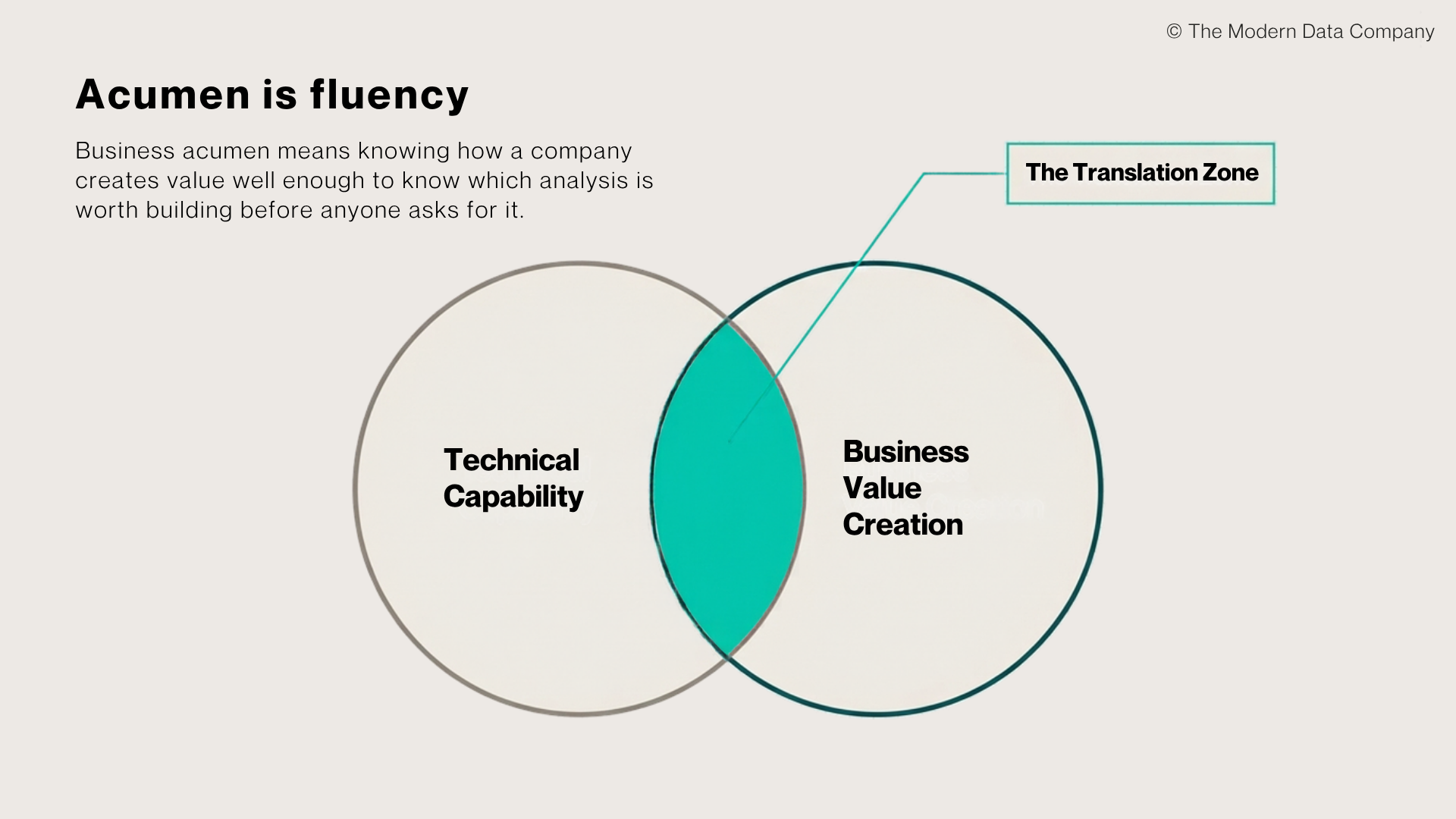
It is not a technical skill, and it is not about learning to read a balance sheet. It is closer to fluency: knowing enough about the business that a data person can tell which analysis is worth building before anyone asks for it.
It also means knowing when data isn’t the answer: a decision made for political reasons, a metric built on bad ground truth, or a technically correct result too minor for anyone to act on. But most of the time, the problem is a translation problem, not a data problem.
The gap this closes shows up clearly in the research. Just 24% of organizations describe themselves as genuinely data-driven, and for years running, the leading survey on the topic has found the same barrier: 80% of respondents say the main challenge is human, culture, process, or organization; not technology.
The Four Business Questions Data Teams Ask to Build Business Acumen
1. Why Does Your Organization Exist?
Start here, because most people get it backward. A company does not exist to make money. Management research on corporate purpose makes the same distinction: purpose in a for-profit firm goes beyond profit maximization, and companies that treat revenue as the goal rather than the byproduct tend to design their operations around the wrong thing. Money is how the company survives to keep creating value.
Netflix is a clean example. Its mission, reaffirmed in its Q1 2026 shareholder letter, is “to entertain the world.” Revenue is what happens when enough people find the entertainment worth paying for.
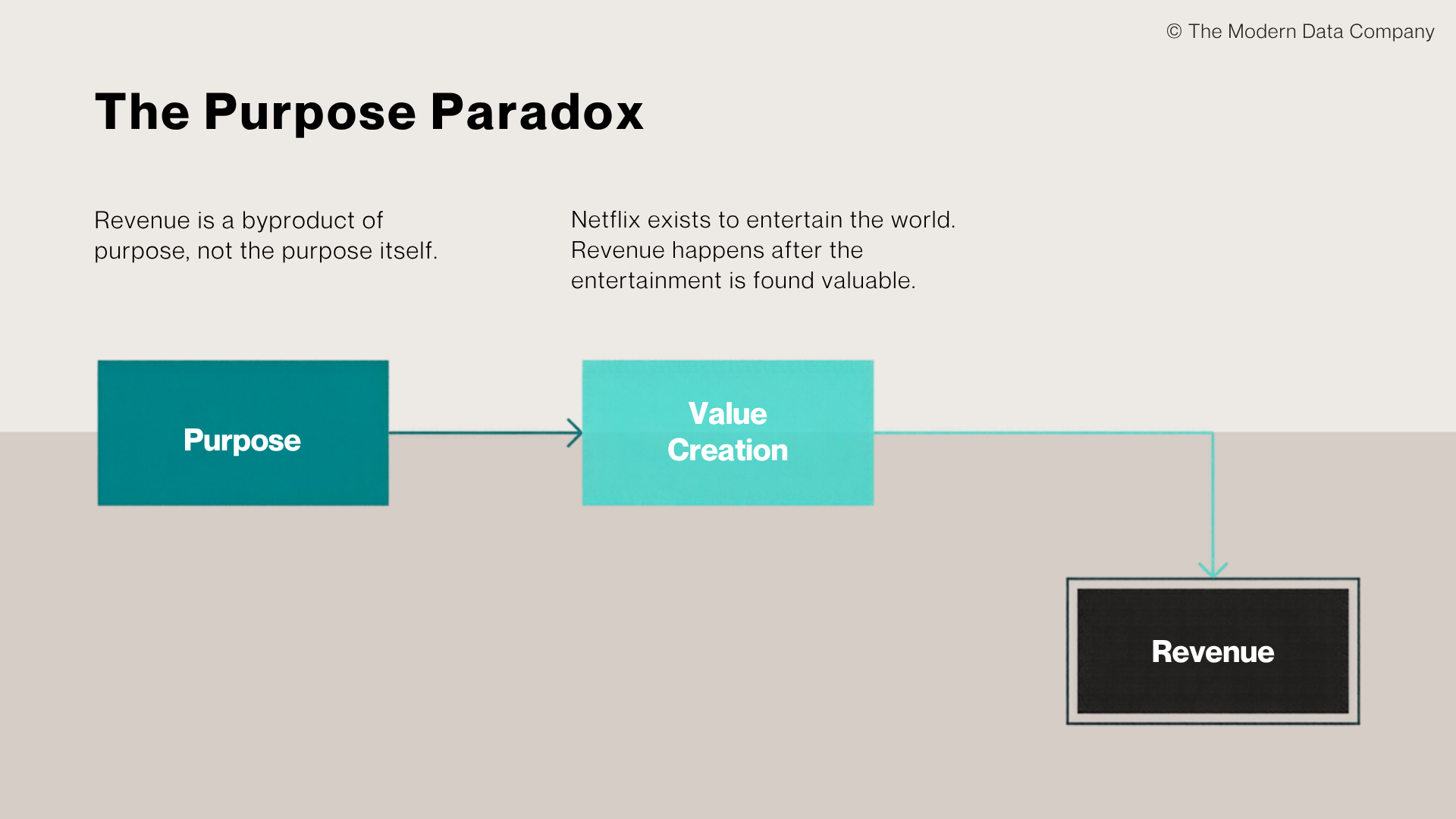
Every metric Netflix builds downstream of that mission, including its well-known focus on hours watched, exists to check whether Netflix fulfills its mission.
Try this: Pull up your company’s mission statement and ask how closely your team’s day-to-day metrics track it.
2. Who Are Your Customers?
Knowing why a company exists isn’t the same as knowing whom it exists for. Most businesses reach customers one of four ways:
- direct to consumer, selling straight to individuals (Netflix, Apple)
- business to business, selling to other companies (Oracle, SAP)
- business to business to consumer, where another business sits between the company and the end user (General Mills, most insurers)
- and consumer to consumer, where the company just provides the platform (Airbnb, Uber).
That distinction changes which data matter most. That is business acumen in its most literal form.
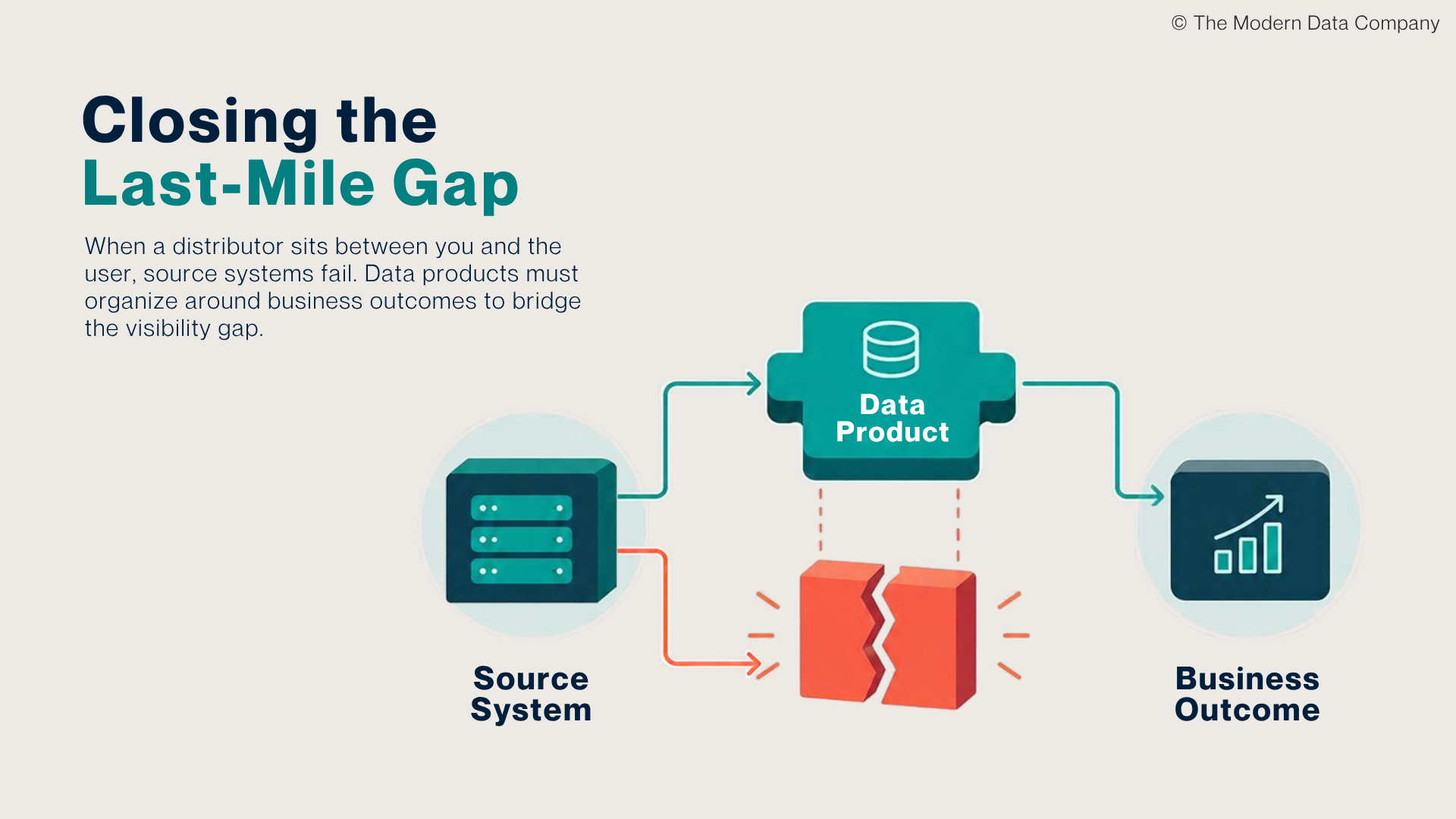
For example, a B2B2C company often lacks “last mile” visibility into the people using its product, because a distributor or retailer sits in between.
So, understanding your product (or service), your market (i.e., customers), and how your product (or service) gets to market is essential to understanding which data are most valuable to your business teams (and therefore which data can drive the most impact in your business instead of lying dormant in an un-viewed report). With that, here are a few techniques for building customer empathy:
- Impersonate them. Pretend to buy your own product or service. Where is there friction?
- Map the customer’s journey, specifically whom they interact with from your company.
- Relatedly, talk to your customer success or customer support teams. They get lots of firsthand feedback. Just remember that there may be some sampling bias. When is the last time you called your internet service provider because your internet was just too fast to believe?
- Read customer feedback: first-party reviews, third-party reviews, or maybe even social media listening.
- If you already are a paying customer, go comparison shopping. What do you observe in competitors’ funnels?
Data products organized around business outcomes rather than raw source systems are one way teams close that visibility gap without waiting for business processes to be codified.
Try this: Ask your sales team to describe your company’s ideal customer profile. Then ask what information is lacking to evaluate whether prospective customers fit that ideal customer profile.
3. How Does Your Company Delight Customers?
Knowing who your customers are still leaves the harder question: how do you know whether the product is actually working for them?
For Netflix, the proxy is hours watched. If people aren’t entertained, they stop watching. If they stop watching, they eventually stop paying for something they no longer use.
Picking that kind of proxy well, and building it as a reusable, well-defined asset rather than a one-off report, is itself a business acumen decision.
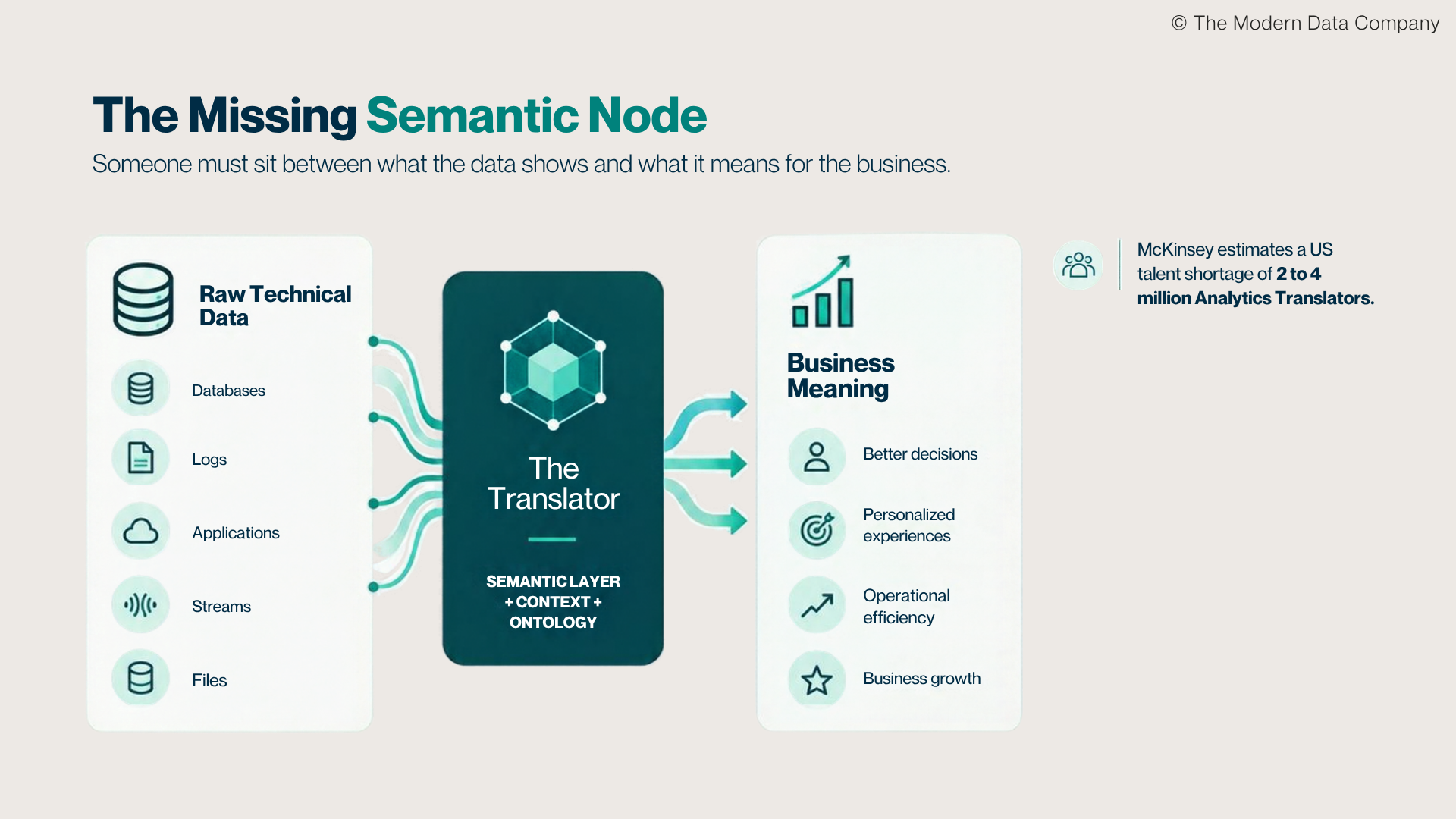
No proxy metric is perfect, which is exactly why the translation role matters so much. McKinsey has argued for a dedicated “analytics translator” role since 2018 for this reason, at one point estimating US demand for the role at two to four million people: someone has to sit between what the data shows and what it means for the business, because the two rarely line up without translation.
Data product management is the modern, product-shaped answer to that same gap: rather than a generalist "translator" floating between functions, it's a role with ownership (a backlog, a roadmap, and accountability for outcomes) applied specifically to data and analytics work.
Ownership matters because translation without authority evaporates under deadlines. Someone can flag that a metric is misleading. An owner has to prioritize a misleading metricagainst a dozen other asks.
A dedicated data product manager sits inside the full lifecycle McKinsey describes. She consults customers and frames which business problems are worth solving. She shapes what the data team builds. She drives adoption of what the team delivers. She's not just consulted at one stage and ignored at the next.
With so many analytics and AI initiatives at once, end-to-end ownership becomes the only way translation survives contact with a real roadmap.
Try this: Ask your customer success team (or equivalent) which of your customers are the most and least delighted and how they know.
4. How Does Delighting Customers Make Money?
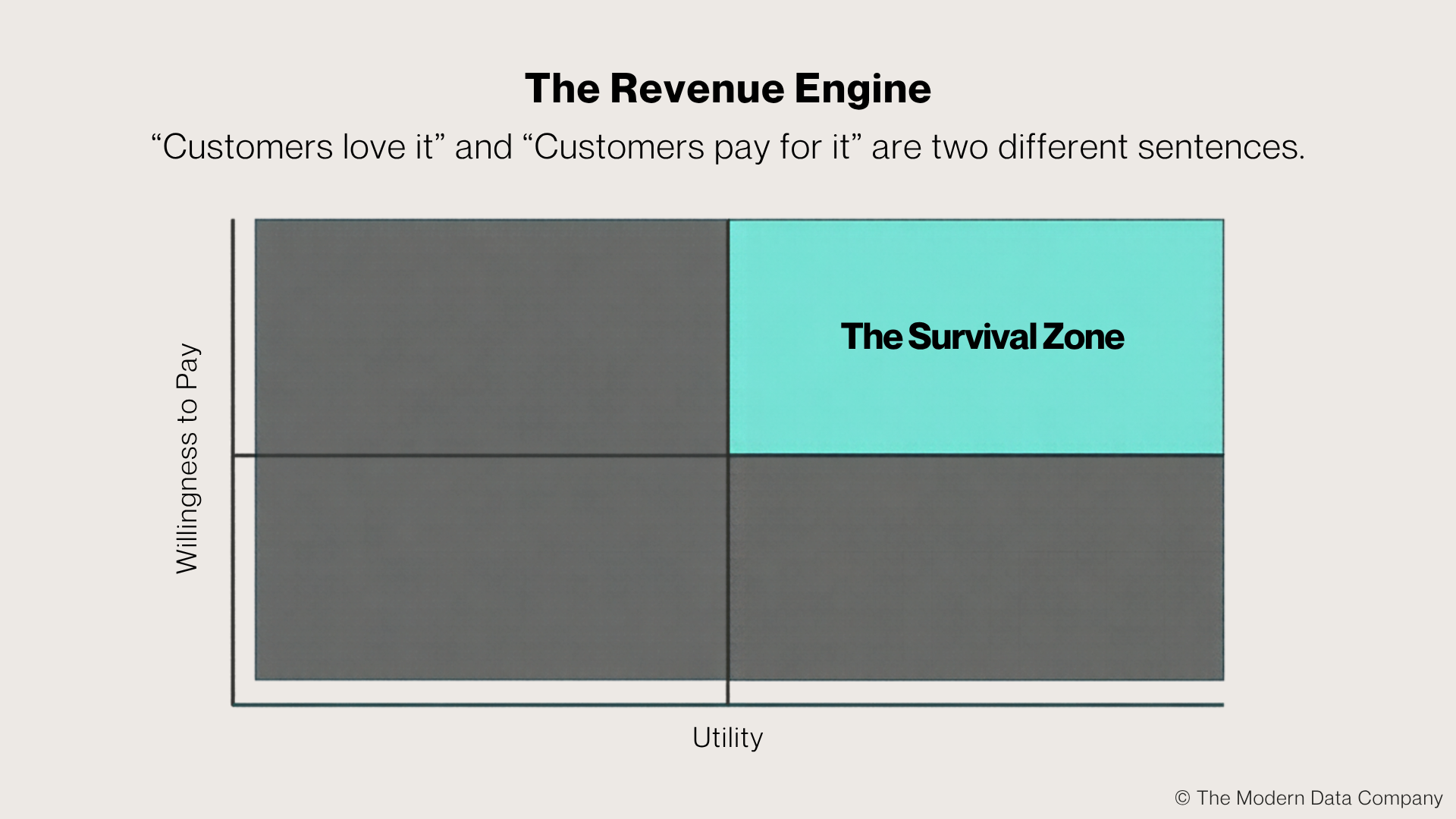
Delighting customers and getting them to pay are related but not identical. Economists have terms for this: utility, how much satisfaction a customer gets from a product, and willingness to pay, the most they’ll actually spend on it.
The two don’t always move together. After all, “customers love it” and “customers buy it” are different statements.
This is where business acumen pays for itself most directly. Tying everyday metrics to the business outcomes they actually drive, rather than reporting whatever a pipeline happens to emit, is what turns a dashboard into something a leader will act on.
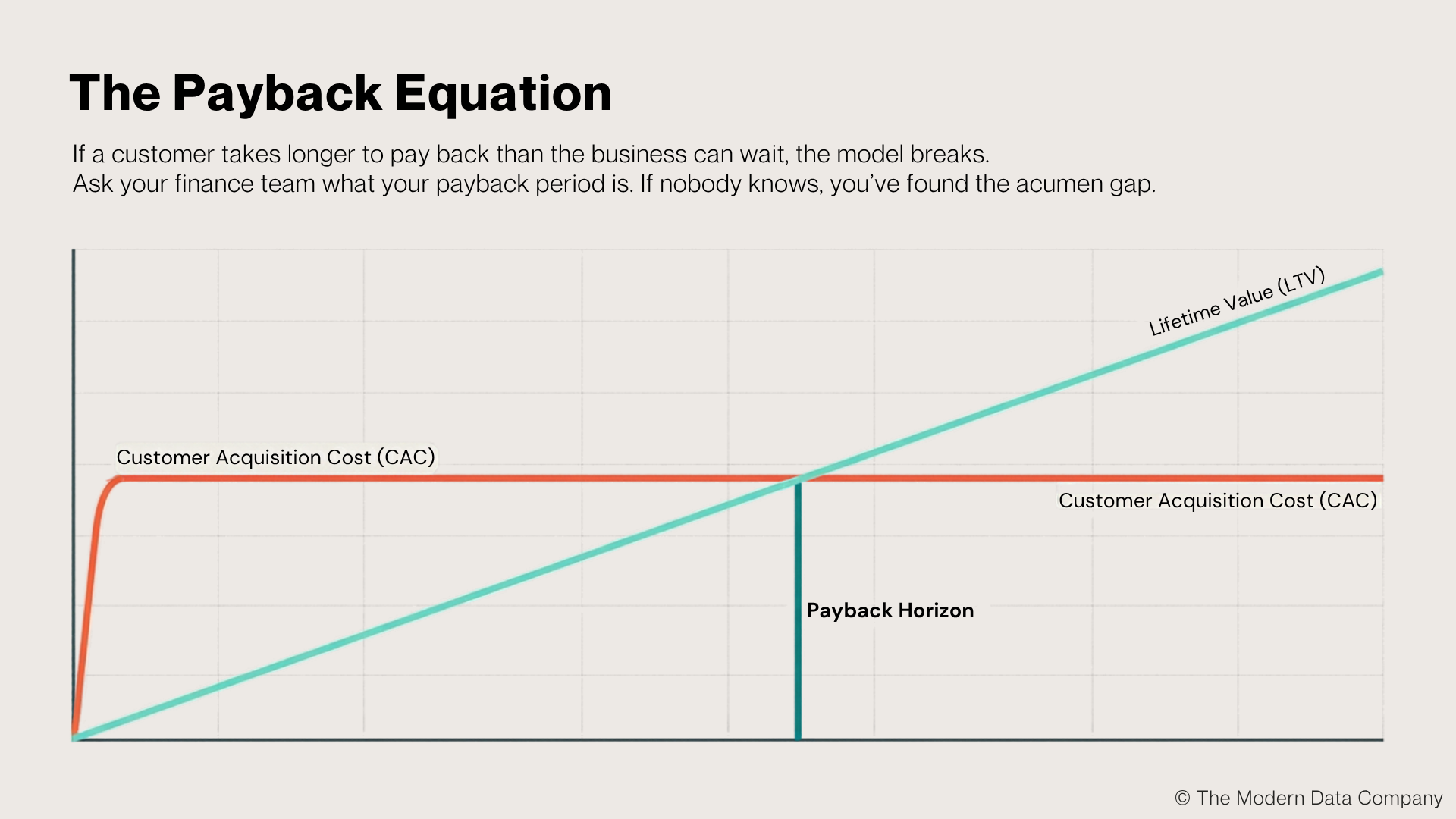
Comparing customer acquisition cost to customer lifetime value and the payback period is the simplest version: if a customer takes longer to pay back than the business can wait, the model doesn’t work no matter how delighted that customer is.
Try this: Ask your finance team what your company’s payback period is. If nobody has a confident answer, that’s an acumen gap worth investigating.
How DataOS Helps Data Teams Develop Business Alignment
None of this gets solved by better tooling alone. Understanding why a company exists, whom it serves, and how it makes money is still, largely, a human job.
Modern Data 101 has made a similar point about AI’s role in closing this gap: AI can translate faster between business language and data language, but it doesn’t remove the need for someone on the data side to understand the business well enough to ask the right question first.
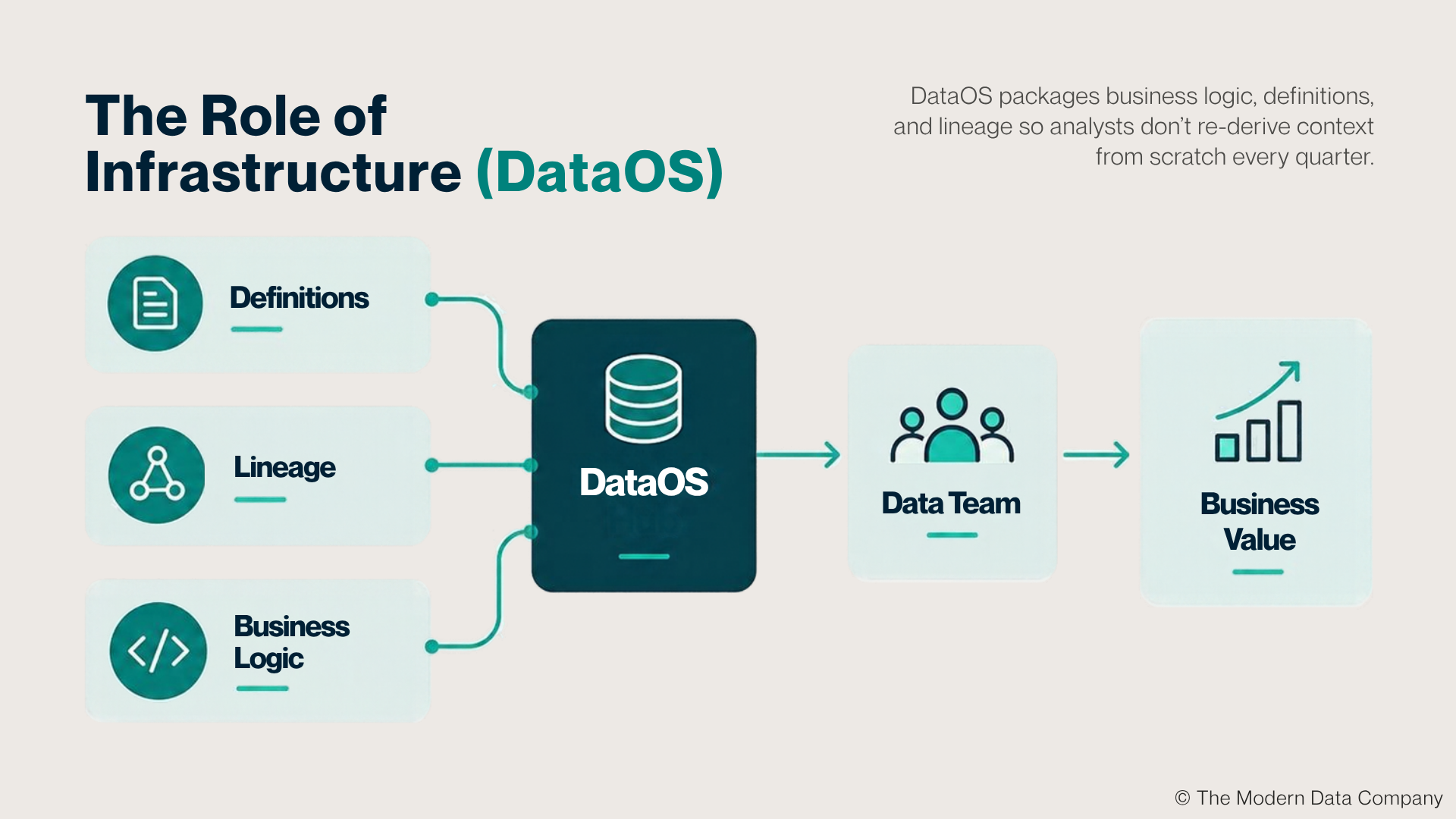
What a well-built data platform can do is stop teams from re-deriving the same business context from scratch on every project. When data products carry clear definitions, business logic, and lineage as part of what they are, an analyst doesn’t have to rediscover what “active customer” means for the third time this quarter.
That is the baseline data products are meant to provide. DataOS packages that context once, so a data team’s limited business acumen goes toward the more challenging translation aspects instead of wondering whether this quarter's logic aligns with last quarter's reported results.
Start Simple, Ask Questions
Acquiring concrete business understanding does not require a data professional to get a business degree or change careers. It requires asking, on the next project, why the project exists, whom specifically it serves, how it delights them, and how that delight turns into revenue, before writing a single line of code.
And ensuring this knowledge gets stored and used is even more important. It saves the cost of knowledge acquisition on repeat and enables individuals to not just acquire business acumen, but distribute it through the infrastructure that acts as a bridge between data and business.
That knowledge only compounds if it's captured rather than treated as disposable. A translator who leaves takes their hard-won map of what "engaged customer" means, which segments actually drive lifetime value, and which past initiatives moved the needle. The next person starts from zero, re-litigating definitions the organization previously settled.
Infrastructure is what prevents that reset: a documented metric glossary, a record of which bets worked and why (with metrics to prove it), a shared model of who the customer is and how the business makes money from delighting them. What's more, version control applied not just to code, but to the metrics and business logic themselves. Just as engineers wouldn't ship code without a commit history, teams shouldn't run a business on numbers whose lineage nobody can trace.
Built well, that infrastructure does for the whole organization what a single translator does for one initiative, except it scales, survives turnover, and lets new hires inherit business acumen instead of rebuilding it meeting by gut-feel meeting.