Financial ServicesScale AI Without Rebuilding Your Data Stack




Accelerate AI, Analytics & Operations with DataOS
Connect data from all your different siloes - legacy and new - so your business has the data it needs, the way it needs it in.


Proven Results
Years of compliance backlog and disconnected data systems had slowed underwriting decisions across the organization. By deploying DataOS to unify claims, transaction, and external signal data, the bank enabled real-time claims decisions with no underwriting delays caused by data issues.
Go from re-building pipelines to creating impact
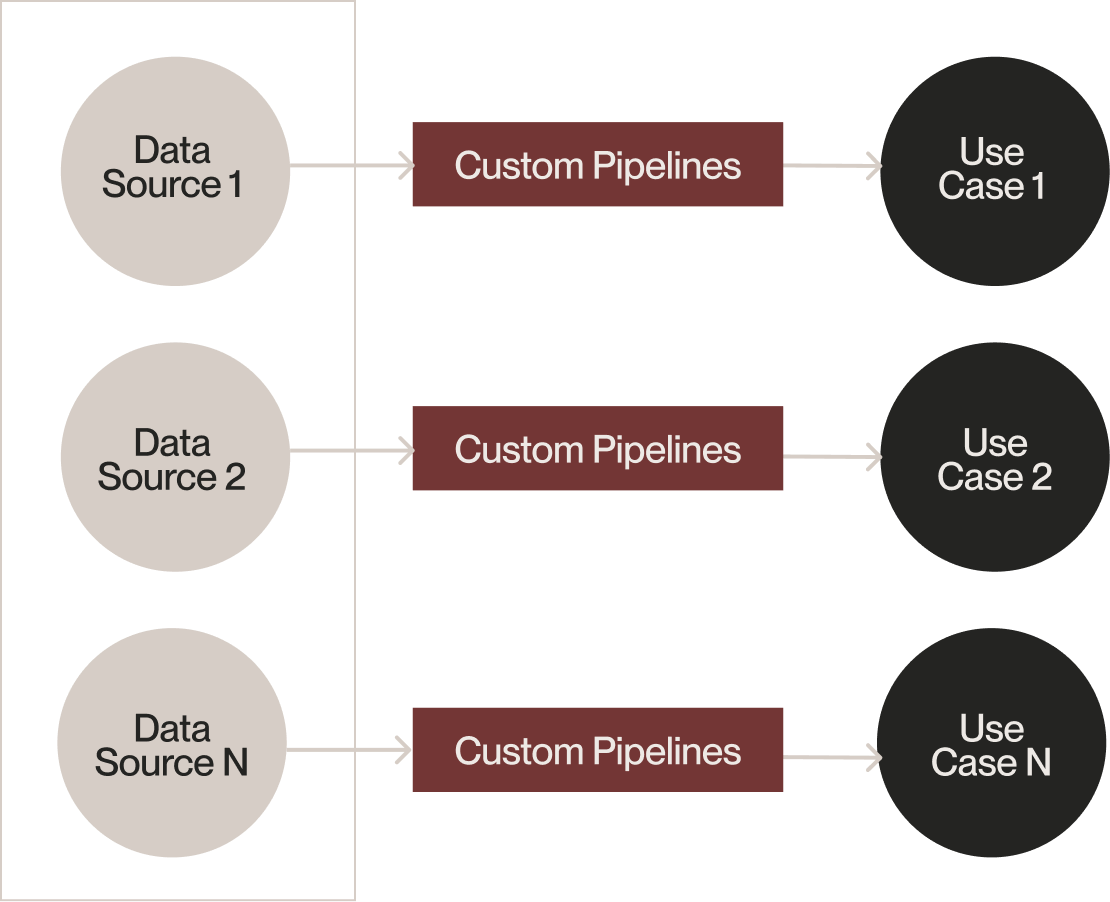
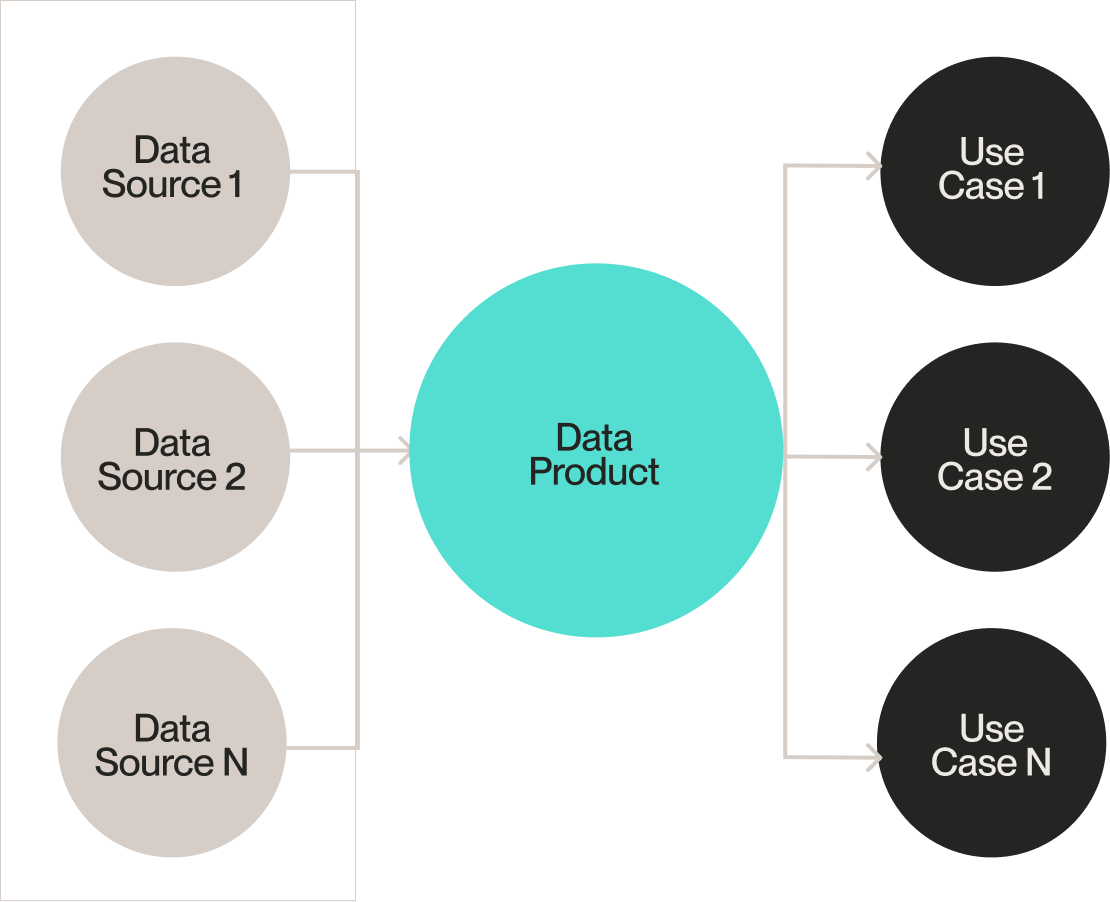
Most banks spend 70–80% of their data engineering budget in maintenance that deliver the same information to the same teams, over and over. DataOS packages that work into reusable data products, governed, versioned, and ready to consume, so your teams stop reinventing the wheel and start focusing on innovation.
One data product, built once. Consumed everywhere.
Traditional Approach
Slow, costly, inefficent
With DataOS
Launch new use cases
80% faster
Within the first quarter, the average DataOS customer eliminates 60–70% of repetitive data engineering work, and reduces TAT by 80% for new development
Built for Regulated, Distributed Data Environments


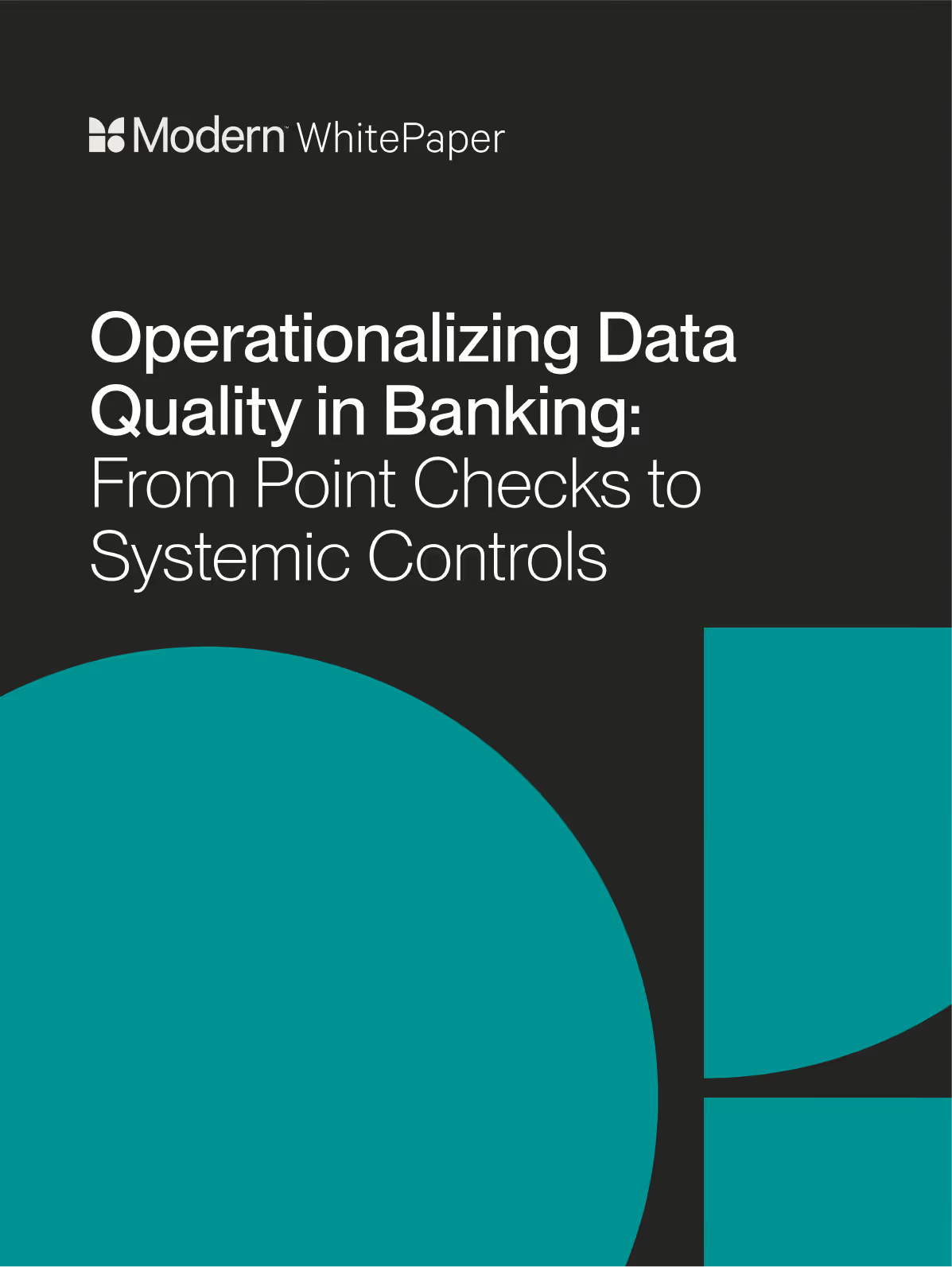
White Papers & Webinars for Financial Services
.avif)
Frequently Asked
Questions
The first data product is typically live within 4–6 weeks. DataOS deploys on top of your existing systems — no migration, no core replacement, no multi-year ramp. Within the first quarter, the average customer eliminates 60–70% of repetitive data engineering work and reduces time-to-delivery for new use cases by 80%.
No. DataOS is explicitly designed to work with what you have — Jack Henry, Fiserv, FIS, Snowflake, Databricks, legacy cores, cloud warehouses, on-prem databases. It sits as a governed semantic and activation layer on top of existing infrastructure. You don't rip anything out. You make what you already paid for actually deliver.
It can replace all of these. DataOS is a data operating system — a semantic, governance, and activation layer that sits on top of your existing data infrastructure and turns it into a product-grade capability. It also works with your warehouses like Snowflake (it doesn't need to replace storage), or catalogs like Atlan (it's not passive documentation). It's the connective tissue that makes all the infrastructure you already have actually deliver business outcomes.
BCBS 239 requires defensible risk data aggregation with documented lineage from source to report. DataOS automates end-to-end lineage tracking — every data product carries a full audit trail of where data came from, how it was transformed, what rules were applied, and who accessed it. That's the answer to an examiner's question, built into the platform rather than reconstructed manually at exam time.
It's actually a reason to move now. The absence of formal guidance doesn't mean your staff isn't already using AI tools informally — 63% of financial organizations have no AI governance policies in place, even while deploying AI. DataOS gives you the lineage, access policies, and audit trail infrastructure to build a defensible governance framework before the examiner walks in with the question. The institutions caught flat-footed will be the ones who waited for the regulation before building the foundation.
Most AI pilots fail for the same reason: the data wasn't ready. 68% of organizations say their data isn't clean enough for AI operations. DataOS builds the quality-to-governance-to-AI sequence — consistent definitions, enforced quality rules, policy-driven access, and contextual metadata packaged with every data product. When your AI tools consume DataOS data products, they're not reasoning over undefined or conflicting data. They inherit meaning, context, and constraints from the platform.
AI hallucination in enterprise settings is primarily a semantic and governance failure, not a model failure. LLMs hallucinate when they reason over data with implicit definitions, contradictory metrics, or missing context. DataOS enforces explicit semantics — every entity, metric, relationship, and business rule is defined and governed. AI systems built on DataOS don't infer meaning; they inherit it from verified, governed data products.
Metric conflicts happen when definitions live in individual pipelines, dashboards, or spreadsheets rather than a governed semantic layer. DataOS centralizes metric definitions — what "delinquency rate" means, how "net interest margin" is calculated, what counts as an "active member" — and enforces those definitions across every downstream system. One definition. No drift.
DataOS resolves it architecturally, not politically. Policy-driven RBAC/ABAC controls mean the CDO gets self-service access for business lines and the CRO gets full audit trails, access logs, and policy enforcement — from the same data layer. That's not a negotiated compromise. It's an infrastructure decision that eliminates the recurring standoff.
Yes - and it's one of DataOS's core use cases. DataOS creates a governed semantic layer across both organizations without waiting for core consolidation to complete. You get unified definitions, a single source of truth for key metrics, and cross-entity reporting from data that already exists — no rip-and-replace project required. Business value from day one post-close, not month twelve.
Most of that maintenance budget is being spent rebuilding the same pipelines, serving the same reports to the same teams, repeatedly. DataOS packages that work into reusable data products — built once, versioned, governed, and consumed across analytics, applications, and AI. Your engineers stop reinventing the wheel and start building net-new capability. The shift from maintenance to innovation is measurable within the first quarter.
No — it extends it. Snowflake is high-performance storage and compute. DataOS adds semantics, governance, data product management, and activation across Snowflake and your other systems. You keep your Snowflake investment; DataOS makes it deliver more by adding the governed semantic layer that turns raw Snowflake tables into trusted, reusable data products your business and AI tools can actually consume.
That's one of the measurable outcomes. DataOS powers a self-service layer where governed data products are discoverable and accessible to business users directly — with access controls, quality guarantees, and consistent definitions enforced automatically. Risk, finance, and compliance teams can answer questions up to 80% faster without routing through engineering.
Three categories of value that map cleanly to board priorities: Compliance cost reduction — automation of audit prep, PII tagging, and lineage reconstruction saves engineering weeks and reduces examiner finding risk. AI acceleration — 80% faster new use case development means the AI investments already funded start delivering returns sooner. Revenue enablement — risk and compliance teams answering questions faster, RMs freed from manual data reconciliation, faster SMB identification from existing member data. The specific numbers depend on your starting point. The discovery call is designed to build a baseline together.
That's the norm at mid-size institutions — the CIO absorbs the full data mandate with a team of 5–15. DataOS is designed for that reality. The goal is to give a lean team platform-level governance and activation capabilities without platform-level staffing requirements. You manage strategy; the platform handles the operational complexity.