M&A Deal Intelligence Understand the Systems and Data Behind the Deal
What systems, data, and customer relationships are part of the deal?
DataOS maps the systems, data domains, and relationships connected to the business being acquired so the deal scope becomes clear as diligence evolves.
Clear deal scope.
Fewer surprises on Day 1.
Shared understanding across the deal team.

Why deal scope is harder than it looks


Who this solution is for
M&A Deal Intelligence supports the teams responsible for executing acquisitions and portfolio transfers.
M&A Execution Teams
Define the scope of the transaction and manage diligence.
Chief Data Officers and Data Leaders
Understand the data domains and systems tied to the acquired business.
Technology Leaders
Map systems, integrations, and shared infrastructure.
Finance and Risk Leaders
Ensure reporting, regulatory obligations, and portfolio structures remain intact.
How DataOS reveals the data behind the deal
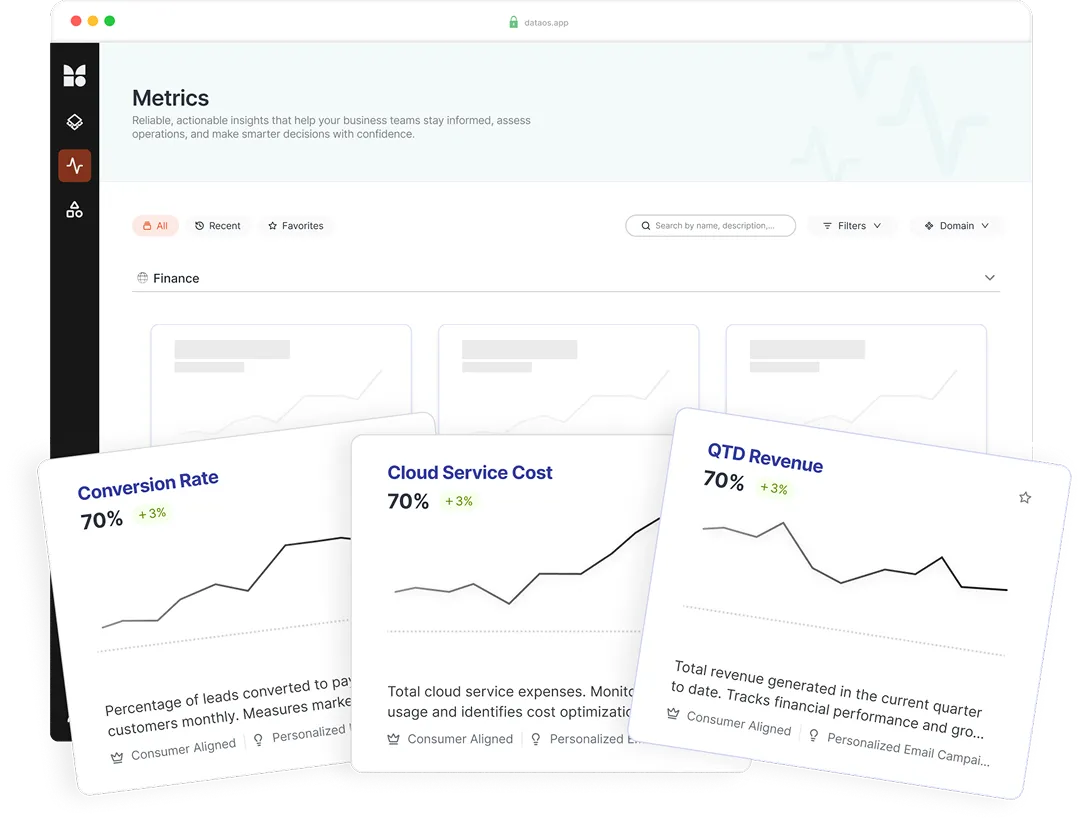
DataOS creates a shared view of the systems and data connected to the business involved in the transaction.
Systems, data domains, and relationships become visible in one place.
As diligence progresses, teams refine this shared view instead of rebuilding the scope with each refresh cycle.
Everyone involved in the transaction works from the same understanding of the deal.
What better deal execution looks like
Sales Channel Intelligence provides unified visibility across the entire distribution network.
Traditional M&A Execution
- Deal scope tracked in spreadsheets
- Dependencies discovered late
- Different teams maintain different views
- Scope changes trigger repeated rework
- Late surprises before closing
With DataOS Deal Intelligence
- Systems and data mapped across platforms
- Relationships visible early
- One shared view across the deal team
- Scope refined continuously as discovery progresses
- Better preparation before Day 1
Why understanding data relationships matters:
Customers, products, accounts, and services are connected across multiple systems.
Without understanding these relationships, separating or acquiring part of a business becomes difficult.
DataOS maps these connections so teams understand how systems and data relate to the deal.
This makes it easier to define what belongs inside the transaction and what remains outside it.
Applications and platforms supporting the acquired business become visible.
Customer, account, product, and operational data connected to the business are revealed.
Shared systems, pipelines, and integrations become clear.
Deal teams update the shared view instead of rebuilding the scope each time new information appears.
Built for complex acquisition programs
Transactions involve multiple teams working simultaneously across finance, technology, and operations.


Frequently Asked
Questions
M&A Deal Intelligence powered by DataOS provides a shared view of the systems, data domains, and relationships connected to the business being acquired so deal teams can clearly understand the scope of the transaction.
Businesses rely on interconnected systems and shared data across multiple divisions. These dependencies often become visible gradually during diligence.
Deal teams gain visibility into systems and data tied to the business so they can refine the scope of the transaction as new information appears.
No. This solution helps deal teams understand the systems and data involved in the deal before integration work begins.
M&A execution teams, data leaders, and technology leaders responsible for transactions and portfolio transfers.