IT and OT convergence Turn device data into operational intelligence
Detect systemic defects earlier, improve product reliability, optimize service operations, and unlock new data-driven services.
Earlier defect detection.
Lower warranty exposure.
Faster root cause analysis.
Proven operational impact with DataOS
Organizations implementing IT and OT convergence for device intelligence see measurable improvements in reliability and service efficiency.


Why device intelligence breaks down
Connected devices generate enormous volumes of telemetry and operational signals. But the information needed to understand device behavior is often scattered across IT and OT systems.
When telemetry, manufacturing, and service data remain disconnected:


How DataOS enables device intelligence
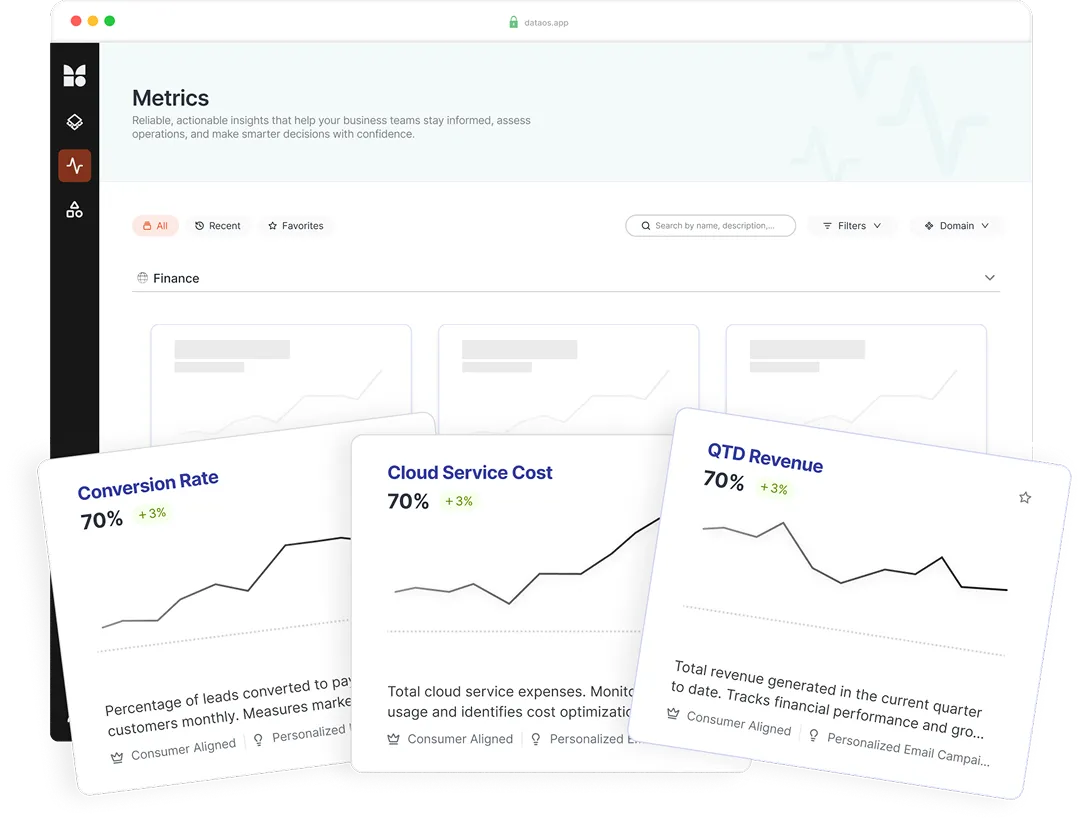
DataOS connects telemetry from devices with enterprise operational data across manufacturing, service, and asset systems.
Instead of investigating incidents across multiple tools, teams gain a unified operational view of each deployed device.
Telemetry signals are automatically correlated with firmware versions, component batches, suppliers, and service history.
Operations, engineering, product, and manufacturing teams work from the same operational intelligence.
What true device intelligence looks like
IT and OT convergence transforms how organizations understand device performance.
Traditional device monitoring
- Telemetry isolated from enterprise systems
- Failures investigated device by device
- Limited visibility into firmware and component impact
- Engineering receives delayed field feedback
- Reactive troubleshooting
Device intelligence with IT and OT convergence
- Telemetry linked to device identity and manufacturing lineage
- Cohort analysis detects systemic defects
- Firmware and component lineage visible across devices
- Field performance directly informs engineering decisions
- Predictive device operations
Why component lineage matters:
Without component lineage visibility, these patterns remain hidden.
Device intelligence links every telemetry signal to device identity, component structure, firmware version, and manufacturing batch.
Systemic defects can be detected earlier and contained before they impact thousands of devices.
DataOS harmonizes telemetry streams with asset registries, manufacturing systems, service platforms, and warranty systems.
Signals from devices are enriched with operational context.
Every device signal is linked to component structure, manufacturing batch, supplier lineage, firmware state, and configuration history.
Telemetry is enriched with business context including SLA tier, warranty coverage, and customer environment.
This allows more accurate prioritization of operational risks.
Patterns across device cohorts such as shared firmware versions or component batches are detected early to reveal systemic defects.
Operations and engineering teams gain a shared operational view that prioritizes incidents and recommended actions.
Field failures link directly to firmware releases, suppliers, and component batches, enabling faster product improvements.
From device data to new services
Connected device intelligence creates opportunities beyond operational monitoring.
Organizations can use device intelligence to build new data-driven capabilities.


Who this solution is for
Device intelligence powered by IT and OT convergence is designed for organizations operating large populations of connected devices or distributed assets.
Connected device manufacturers
Companies producing laptops, routers, industrial equipment, and IoT products.
Telecom and broadband providers & districts
Operators managing large modem and network device environments.
Industrial and smart infrastructure companies
Organizations operating connected equipment across distributed environments.
Enterprises managing large device deployments
Businesses running extensive endpoint environments across regions.
Built for large-scale connected device environments
Device intelligence must operate across engineering, operations, and service teams simultaneously.


Frequently Asked
Questions
IT and OT convergence connects device telemetry with enterprise operational data including manufacturing records, asset registries, firmware history, service tickets, and warranty systems. This creates a unified operational view of every deployed device.
By correlating telemetry with component lineage, firmware versions, and manufacturing batches, organizations can detect systemic defects earlier and respond before widespread failures occur.
Yes. Early detection of defect patterns across components, suppliers, or firmware versions allows organizations to intervene before issues escalate into large-scale warranty claims or recalls.
Field device performance becomes a direct feedback signal for engineering teams. This shortens the cycle from field incident to root cause identification and product improvement.
DataOS standardizes integration across telemetry systems, service platforms, manufacturing data, and asset registries. This approach can accelerate device intelligence initiatives by up to 80 percent compared with traditional integration projects.
Yes. DataOS can ingest signals from legacy systems including service logs, device error codes, maintenance records, and batch manufacturing data. These signals can be combined with telemetry where available to build a unified device record.