Claims & Case Resolution Make every claim decision defensible
Claims & Case Resolution powered by DataOS brings claimant data, medical documentation, and case evidence together into a continuously validated Intelligent Case. Agencies accelerate adjudication while strengthening compliance and audit readiness.

Proven operational impact with DataOS
Organizations modernizing adjudication with Intelligent Cases see measurable improvements.


Why claim decisions slow down
Most claims programs manage evidence across multiple systems and document repositories.
When evidence is fragmented:


How DataOS helps resolve claims faster
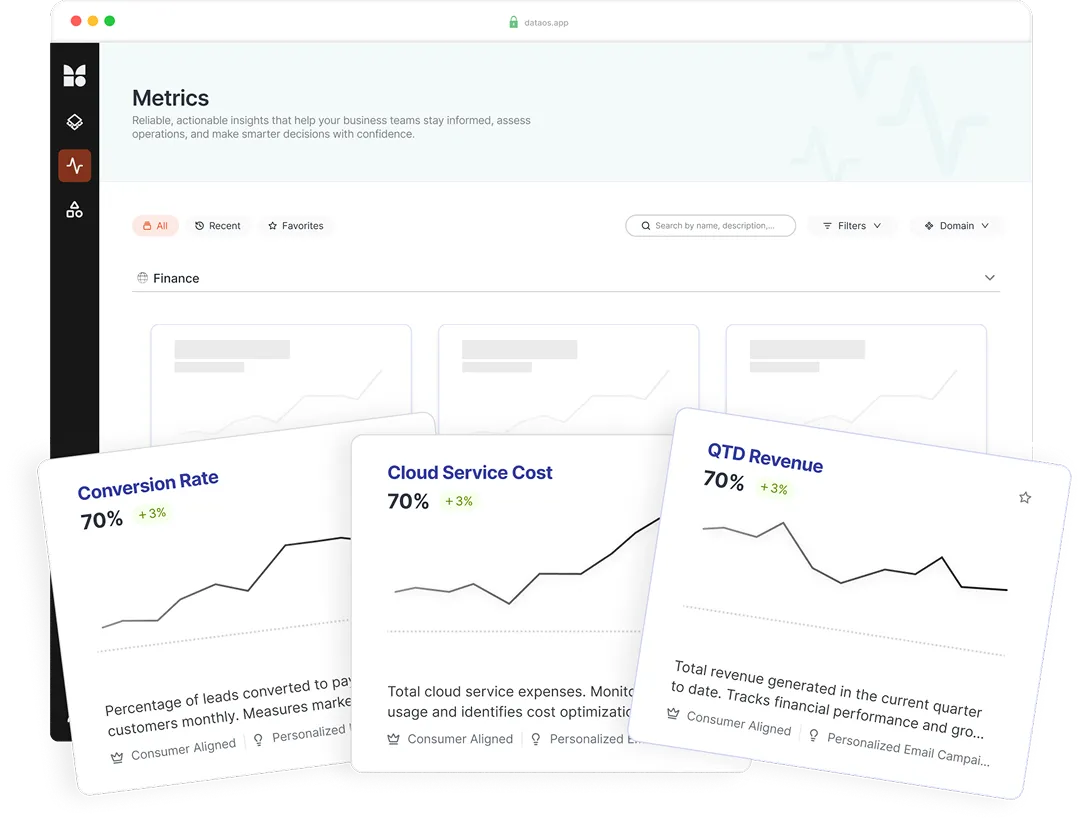
DataOS turns fragmented claim information into a continuously structured Intelligent Case.
Instead of assembling evidence manually, claimant data and medical documentation are automatically ingested, structured, and linked to the case record.
Reviewers see a complete case with validated evidence, searchable documentation, and full data lineage.
Adjudication becomes faster, clearer, and defensible.
Who this solution is for
Claims & Case Resolution is designed for organizations responsible for high volume medical or benefit adjudication.
Government healthcare agencies
Programs managing public health claims, reimbursements, and medical documentation.
Disability and compensation programs
Adjudication environments with complex eligibility rules and extensive medical evidence.
Public insurance and benefits programs
Organizations responsible for large scale claims review and case management.
Veterans or national health services
Agencies managing medical documentation, claimant history, and eligibility determinations.
What an intelligent case looks like
An Intelligent Case brings all claimant information and evidence together in one continuously validated case record.
Traditional case files
- Evidence scattered across repositories
- Manual document reconciliation
- Sequential review cycles
- Limited audit traceability
- Backlogs discovered late
Intelligent cases
- Evidence unified into one structured case
- Automated evidence ingestion and validation
- Continuous case readiness
- Full evidence lineage and chain of custody
- Real time operational visibility
Why evidence structuring matters:
Reviewers must manually interpret and reconcile documents before decisions can be made.
Claims & Case Resolution automatically structures unstructured medical documentation so evidence can be searched, linked to claim criteria, and analyzed.
Reviewers spend less time digging through files and more time making decisions.
Claimant records, medical documentation, and supporting evidence are ingested from claims systems, document repositories, and medical record platforms.
Data quality, completeness, and access controls are enforced at ingestion.
Unstructured medical documentation is transformed into structured evidence elements that can be searched and linked to claim criteria.
Each claim becomes a unified Intelligent Case containing validated evidence, claimant data, and document lineage required for adjudication.
Operational dashboards provide visibility into claim status, backlog trends, reviewer workload, and case progress.
Leadership sees issues early instead of reacting to crisis backlogs.
Reviewers can ask questions such as:
What medical evidence supports this disability claim?
Which documents are missing for eligibility verification?
Relevant evidence and case insights appear instantly.
Built for high volume adjudication environments
Claims programs must manage large volumes of documentation, complex eligibility rules, and strict regulatory oversight.


Frequently Asked
Questions
An Intelligent Case is a continuously validated case record that consolidates claimant data, medical evidence, and document lineage into one structured bundle used for adjudication.
Medical documentation is automatically structured and validated at ingestion, allowing reviewers to focus on evaluating evidence instead of reconciling documents.
Yes. Claims & Case Resolution ingests data from existing claims platforms, document repositories, and medical record systems without replacing core infrastructure.
Every document and data element maintains full lineage and traceability so agencies can reconstruct how a determination was made and demonstrate compliance during audits.
Yes. Automation of evidence ingestion, structuring, and case intelligence reduces manual review effort and accelerates claim processing.
Yes. Natural language case intelligence allows reviewers to quickly locate evidence, summarize documentation, or identify missing information.
Yes. The solution enforces role based access controls, governance policies, and compliance safeguards required for public sector healthcare environments.